

A friend of mine once ran a small business that was doing very well. Orders were coming in, customers were happy, and on paper, the numbers looked great.
But one month, things got tight. Salaries were due. Supplier invoices piled up. And the bank account was almost empty.
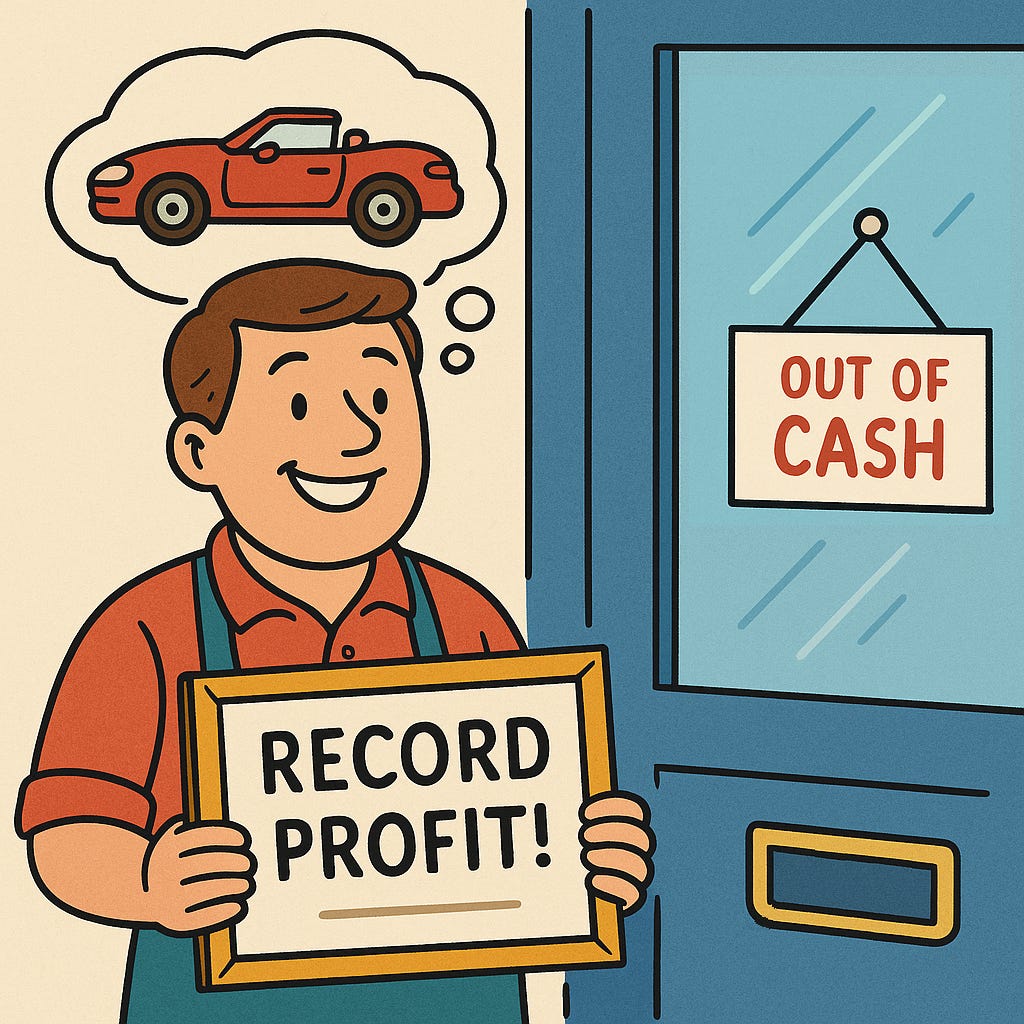
He looked at me and said, “I don’t understand. We’re profitable. How can we be out of cash?”
That moment captures a reality many people underestimate.
The uncomfortable truth about cash
Many startups fail because they run out of cash. They simply cannot pay their bills anymore. Supplier invoices. Salaries. Rent.
Every business has a constant need for cash. Without it, the business stops.
It is not about physical cash, coins or bills. It is about money in your bank account that is available when payments are due.
If that money is not there, the consequences are immediate. A company that cannot meet its obligations is insolvent and may have to file for bankruptcy.
What makes this difficult to grasp is that this can happen even in a profitable business.
Why Timing and Flexibility Matter
Imagine you sell a product for 100 that costs you 60 to produce. On paper, that is a healthy margin. You are making a profit.
But selling something does not mean you receive the money today. At the same time, suppliers and employees expect to be paid now.
This creates a gap. You are profitable on paper, but short on cash in reality. Over time, this might balance out. In the end, it comes down to timing. But in the moment, that gap creates real pressure.
Profit doesn’t keep a business alive. Cash does.
Cash flow is not just about survival. It determines how much flexibility you have, whether you can invest in new opportunities, and how much buffer you have when things don’t go as planned.
On paper, many businesses look strong. In reality, the ones with cash have options. The others have constraints.
In this post, I want to show you where this gap comes from and how businesses can structure their operations to improve cash flow.
How quickly do you turn work into money?
Let’s start with incoming cash. You sell your product or service, and the customer needs to pay.
In many businesses, customers don’t pay immediately. Payment terms of 10, 30, or more days are common.
Think of a carpenter building a kitchen. You receive the invoice and might have 10 or 30 days to pay. During that time, the carpenter has already done the work, but the cash has not arrived yet.
Shortening payment terms helps close that gap. Asking for payment within 10 days instead of 30 improves your cash position without changing the business itself.
Some companies offer small discounts, like “2% if you pay within 10 days.” They give up a bit of margin, but receive cash weeks earlier. They are essentially buying liquidity.
Sometimes, the improvement is even simpler. Don’t wait too long with sending out invoices. Make it a habit to issue invoices immediately after the service is provided. Every delay directly worsens your cash position.
For some business models, you can rethink the structure entirely. Take a gym membership. Instead of paying per visit, customers pay a fixed monthly fee. This brings predictable cash flow, even if usage fluctuates.
The same idea can work in service businesses. An IT provider could move from hourly billing to a monthly package. The work might be the same, but the cash flow becomes much more stable.
How long can you hold on to your cash?
Now the other side. The carpenter needs to buy wood. Naturally, he wants to delay payment as long as possible.
If he can pay after 60 days instead of 30, his cash flow improves immediately.
The challenge is that the company selling the wood also wants to collect cash quickly. They are optimizing their cash flow too. Negotiating longer payment terms is not always easy, but it can be possible. Especially if the supplier values the relationship.
Ideally, the carpenter receives cash from the customer before paying the supplier. This doesn’t just close the gap. It creates a temporary cash buffer.
Large retailers are very strong at this. They negotiate long payment terms with suppliers, but receive cash from customers almost immediately at checkout. A well-known example is Amazon. Customers pay upfront when they place an order, but suppliers are often paid weeks or months later.
Supermarket chains operate similarly. They receive cash at checkout, while suppliers wait. In effect, suppliers finance part of the business.
Many small businesses pay invoices as soon as they arrive. It feels responsible, but paying on day 5 instead of day 30 rarely improves relationships. But it reduces your cash buffer. Good cash management is sometimes just using the time you already have.
Where is your cash stuck without you noticing?
Cash doesn’t just leave through payments. It can get stuck in inventory.
A retailer might order extra stock “just to be safe.” On the surface, nothing is lost. But the money is sitting in products instead of your bank account. That’s a timing problem: cash is trapped and unavailable.
It gets worse with waste. A restaurant that throws away food isn’t just losing margin. It’s losing cash that won’t come back.
Speed matters as much as margin. Two products can have the same margin, but if one sells in 3 days and the other in 3 months, the faster one is far more valuable because cash is freed up sooner.
The takeaway: inventory isn’t just about having enough. It’s about how fast cash moves through your business.
Are you growing faster than your cash allows?
Growth can be tempting. Opening multiple locations at once signals ambition but also requires significant upfront cash.
Every new location requires upfront investments: furniture, equipment, renovations. Often you need to pay before earning the first revenues.
Even if the expansion works, it puts pressure on cash flow. Growing at a slower pace can be more sustainable, allowing expansion without risking day-to-day operations.
When it comes to equipment, you sometimes have the option to lease instead of buy. Buying means paying upfront. Leasing spreads payments over time. The total cost may be higher, but from a cash flow perspective, it is often easier to manage.
Some companies go further and sell assets, then lease them back. These deals are designed to free up cash while continuing operations.
Every decision comes with a price
As always in business, there is no absolute right or wrong. Every lever comes with downsides.
Faster customer payments might strain relationships. Delaying supplier payments could damage partnerships. Lower inventory increases the risk of stockouts. Cutting investments may slow growth.
Every cash flow improvement is a trade-off. Strong businesses manage these consciously, balancing benefits with risks.
Making your business more stable
Going back to my friend: his business didn’t struggle because it wasn’t profitable. It struggled because the timing of cash didn’t work in his favor.
Once he started paying attention to when cash actually moved, things changed. He invoiced faster, negotiated better terms, and became more deliberate with inventory and investments.
The business didn’t suddenly become more profitable. But it became more stable. And that made all the difference.
Cash flow is not just a finance topic. It reflects how your entire business operates.
You don’t fix it with one single decision. You improve it through many small, deliberate actions.
Well put especially the emphasis on timing over profitability. In many businesses, the real pressure sits in receivables and payment cycles, not margins. Small changes like invoicing speed or payment terms can materially shift liquidity and working capital flexibility.
A business can be profitable… and still go broke.
Why?
Because profit is on paper. Cash is in the bank.
If customers pay you in 30 days but expenses are due today — you’re in trouble.
The real game in business isn’t profit.
It’s cash flow timing.